
![[personal profile]](https://www.dreamwidth.org/img/silk/identity/user.png) mistralmods) wrote2021-04-08 07:49 pm
mistralmods) wrote2021-04-08 07:49 pm


Setting & History
Preface: The setting notes listed on this page are all things a character might know, either prior to the start of the game or throughout the course of the game. Some characters might know everything listed here, while sheltered characters might know very little. Information that the players would know but the characters wouldn't can be found on the F.A.Q. page.
HISTORY
World Creation
The world of Remnant was created by two brothers, referred to by the planet's inhabitants as The Brothers Grimm. Like most siblings, these brothers were competitive and often quarreled with one another. The first brother created humanity, believing that creativity and intelligence were the strongest traits a being could have. The second brother created the Grimm to test his brother's creations, and see which of their creatures were the strongest. In the early days, mankind was often pushed to the brink of near-extinction, until the discovery of Dust. With mankind's ingenuity, they figured out how to harness Dust for their use and pushed back the Grimm. After centuries in the darkness, mankind not only learned to survive, but to flourish.
Forming Civilization
In the early days, humans formed tribal societies, and they began to spread out across the continent of Sanus. Sea travel during that time was extremely dangerous, as Grimm were known to scour the water and skies as well as the land. Expedition parties were often formed primarily of those who knew how to fight, and how to mask their emotions so that they would not be detected. Some brave parties made the journey to the northern continent of Solitas in the hopes that the frozen climate would deter the existence of Grimm. Travel to the hitherto unnamed "dark continent" quickly became discouraged, as those who made the journey never returned, nor sent word back to those who remained behind. Eventually these tribes began to settle into colonies, and those colonies grew to cities, and those cities grew into kingdoms. With the Grimm remaining an everpresent threat, the drive to gather resources was fierce, and tensions between the kingdoms broke out into wars. In the end, only four kingdoms remained strong enough to emerge as major powers among humans: Vale, Mistral, Atlas, and Vacuo. The smaller island continent of Menagerie to the south was not discovered for centuries, and so it did not play a major part in human wars until much later.
The Four Kingdoms and the Foundation of Beacon Academy
Unsurprisingly, the four remaining kingdoms were those that held the most valuable resources: Dust, and fertile land from which one could grow food and raise livestock. Atlas and Vacuo had access to the best Dust repositories, while Vale and Mistral had rich earth and clean water in plentiful supply. Skirmishes and wars were common between the kingdoms, and in the wake of each devastating battle came the Grimm. Humankind began to diminish, particularly those who lived in smaller villages and settlements who had fewer defenses. In the kingdom of Vale 200 years ago, King Chesnial recognized the damage that was being done to his people, whom he had sworn to protect. More people died from Grimm attacks than those who fell to the blades of outside enemies. In an effort to restore peace, he sent his three children in secret to work in service for each of the kingdoms: Prince Lycom to Atlas, Prince Lexian to Mistral, and Princess Vanitia to Vacuo. They were ordered not to reveal their origins, but to labor in defense of each nation to protect them from Grimm and sow the seeds of peace. Fifteen years later, when each child had earned a place of trust amongst the people, Chesnial called for a meeting, asking for the leaders of the nations to meet and work out terms to end the wars for the sake of their people. At the behest of the princes and princess who served in secret, the four nations came together and brokered a peace treaty between them. They created trade routes in order to exchange their resources, and Chesnial himself laid the foundations for the creation of a school to train young men and women not to fight each other, but to battle the Grimm, their true enemy. The doors of this school, dubbed Beacon Academy, would be opened to any member of any nation who wished to enroll.
The Faunus
The origins of the Faunus race are unknown. Humans were surprised to find that a third species beyond the humans and Grimm lived on Remnant, especially since it became apparent that the Faunus were very much aware of humans. Up until the four kingdoms brokered peace through King Chesnial, the Faunus dwelled exclusively on the island continent of Menagerie, disgusted with what they saw as petty human conflict that would lead only to their own self-destruction. Though most Faunus closely resembled humans in appearance, they also possessed attributes that were plainly animal in nature -- the ears of a cat, the gills and fins of a fish, the tail of a monkey. Most of these traits were beneficial to the survival of the Faunus as a species, in addition to the universally shared ability to see clearly in the dark. Some believe that it is the close bonds the Faunus share with nature that enabled them to receive these extra gifts, though no one truly knows for sure, not even the Faunus. Once the wars ceased, the first Faunus appeared as small traveling guilds of mysterious warriors who lent a hand to the grieving and broken nations to drive away the frenzied Grimm that had begun to thrive and encroach on civilization. The Faunus then departed from the four kingdoms to report back to Menagerie, where they intended to live solitary and aloof once more.
King Chesnial issued an invitation to the Faunus to visit his kingdom and enroll at Beacon Academy. His initial request and subsequent invitations were ignored at first, but eventually, small bands of wary diplomats embarked toward the continent of Sanus to see if Chesnial would be true to his word. Most humans had never seen a Faunus before, and some had never known of their existence. While most Faunus were content to live the rest of their lives ignoring humans as their ancestors had, there were several (mostly young explorers with a strong case of wanderlust) whose curiosity prompted them to strike out and see the rest of the world. Though Vale had issued the invitations, the Faunus seemed to favor Vacuo the most, as both societies valued independence and strong warriors who weren't afraid to stand against the Grimm.
Over the decades, Faunus became more comfortable integrating themselves with human society, though Menagerie still remains an isolated kingdom and paradise only for the Faunus. The topic of allowing humans to live there is a hotly debated topic, where the most commonly held opinions are either 'Not yet' or 'Only if they earn it.'
GEOGRAPHY
Notes: The culture and geography of the kingdoms of Remnant seem to be inspired by those on earth: Atlas reflecting the high society of civilized European countries, Mistral being Asia, and Vacuo a blend of Africa and the Middle East. Menagerie may be based on Australia. Vale doesn't seem particularly noteworthy, except as a generic fairy tale setting of a kingdom with castles and forests. Players may feel free to change the names of food and items with earth names with a Remnant version (i.e. French toast = Atlesian toast, Chinese food = Mistralese cuisine). It's fine to refer to things by our more well-known Earth versions (hamburgers can still be hamburgers even if there's no city of Hamburg on the map), or to flex your creativity muscles and come up with new names and unique cultural pieces to flesh out your experience in the game. The notes below are to serve as an inspirational guide, not a harsh set of restrictive rules.
Vale
The kingdom of Vale is often seen as a sanctuary, especially to the Faunus who wish to live peacefully alongside humans. The most populated city is also named Vale, and is nestled snugly in a lush green valley surrounded by cool woodlands and vast fertile plains well suited for farming. Much of the kingdom is veined by rivers and streams, which water the land and enable the growth of trees, shrubs, and wildflowers. Vale is located on the eastern half of the continent of Sanus, and the climate is considerably less harsh than that of its westerly neighbor, Vacuo. Vale's climate is temperate, and it typically sees all four seasons (with the exception of the southern coastal region which is more wet and seldom has snow). Beacon Academy lies in the heart of the city of Vale, where the majority of the worlds huntsmen and huntresses train themselves to battle Grimm. Field trips often take students to the Forever Fall Forest, named because of the year-round scarlet color of the foliage. Training also takes place in the Emerald Forest to the east. To the south of Vale are the Ruins of Mountain Glenn, where the 300-hundred-year-old remains of the castle fortress have since been run down and overgrown. Also part of the kingdom, the small island of Patch to the west allows for simple country living, and is home to Signal Academy which serves as a more public school for children ages 5 through 17. Though there are several smaller villages and settlements throughout the kingdom, most prefer to live in either the kingdom capital or larger surrounding towns which are protected by Dust Barriers. Because of Vale's strong agricultural impact, Vale profits from trade with the other kingdoms.
Atlas
Located on the frozen northern continent of Solitas, Atlas is well known for its technological advances and rich Dust mines. Unlike the other kingdoms, Atlas's primary population gathers only in Atlas and Mantle, as the below-freezing temperatures are not as big a deterrent to Grimm as initial pioneers believed. Whatever settlements might have existed in the past, all others were wiped out. The economic divide between the wealthy elite and the impoverished laborers is vast. The most wealthy and prominent citizens reside on the flying city of Atlas, called such because the entire city flies hundreds of feet above the ground thanks to multiple deposits of Gravity Dust. The mines themselves are manned by laborers who reside primarily in Mantle, which lies quite literally in Atlas's shadow. There are far more people living in Mantle, which is kept heated by the leftover Fire Dust after the crystals are processed and refined. Most of the people who dwell here are poor, barely earning starvation wages while laboring long hours in the Dust mines. Atlas, too, boasts of an academy that trains young adults, but this academy's focus is largely bent toward enhancing its military might rather than slayers of Grimm. Not all of Atlas's population is deserving of its reputation for being coldly self-serving, but there are enough people in power with questionable ethics who do very little to shake that reputation. Because so little can grow in these polar climates, Atlas trades technology and Dust for agricultural goods (crops and dairy from Vale, silks and grains from Mistral, and the highly coveted Plant Dust from Vacuo). The very wealthy maintain greenhouse gardens, where flowers are highly prized.
Mistral
Located on the continent of Anima, Mistral is the biggest kingdom and the most heavily populated. Tradition is highly valued here, as is the pursuit of history and knowledge. Where populations tend to be fairly central in the other kingdoms, Mistral has about one hundred times more towns and villages scattered across its expanse. History indicates that another kingdom once shared this continent, but it was swallowed long ago by the victor, and history was altered as it often is in favor of those who win wars. The capital of Mistral, which shares the name of its kingdom, is nestled securely in the heights of a jagged mountain range where all paths leading to its heights are most easily monitored. Mistralese culture seems to reflect that of our own China and Japan, including food, clothing, and names. Most people of Mistral value self-sufficiency, and they tend to keep to themselves rather than engaging in active trade and exploration with the other kingdoms. Even so, because they rely on the protection of Dust Barriers, they trade most heavily with Atlas and have allowed them to build an outpost on their northern coast (Argus, established fifteen years ago). The decision to allow this outpost was met with strong negative backlash, as many were still distrustful of Atlas after the wars and still fear an invasion with their ever-growing military might. However, when the fair-sized town of Shion was annihilated by Grimm due to the Dust Barrier's loss of energy, the outpost was reluctantly allowed and serves as a major port of trade between Mistral and Atlas. Other major cities of note include Windpath (heavily patrolled by kingdom guards to ensure the capitol's safety), Kuchinashi (once served as a previous king's vacation home and is renowned for its beauty and hot springs), and Higanbana (a town now overpopulated after refugees were forced to flee from Shion and Kuroyuri, which were both destroyed by Grimm before Argus's founding). Because there are so many remote villages and towns, bandits are a growing plague in Mistral, and their raids have often led to the complete demise of a settlement as Grimm are quick to prey upon the tragedy left in the wake.
Vacuo
As insular as Mistral is, they've got nothing on the people of Vacuo. Most visitors are discouraged by the arid desert heat and the long journey that can only be made on horseback as the terrain can't be traversed by land vehicles, and air transport is often disoriented and lost or outright destroyed due to the unpredictable and violent sand storms. And if the climate doesn't serve as a deterrent, the big stacks of paperwork required to gain visitation rights will certainly do the job. One might think that it would be the Vacuans who'd want to migrate away from the desert and live somewhere nicer, but that's only because those people have never visited the oasis paradise where most Vacuans call home. The people of Vacuo are a hardy sort, and most are trained from childhood how to fight. They excel in combat, even those who are unable to discover their Semblance, and they work hard with a strong sense of community. Vacuans often have darker skin, ranging from a ruddy tan hue to almost perfect black, though hair and eye colors vary as much as any other nation. They're strong and fit, and they work hard almost as much as they play hard. The Vacuo capital and its smaller sister city Coquina Oscuro are sun-warmed tropical retreats, surrounded by tall swaying palm trees and stouter banana trees. They're peppered with numerous pools of cool clean water, and the heady scent of sweet floral blooms fills the air. All of this is made possible thanks to copious amounts of Water and Plant dust, the latter of which seems to only be found in Vacuo. The kingdom is a rival of sorts to Atlas, as both flourish in spite of harsh (yet completely opposite) climates, and both are rich sources of Dust. Atlas's technology is superior to that of Vacuo, which spurns heavy reliance on machines to do the work of people. Their Dust Barrier is unique to those built by Atlesians, in that Vacuo's uses raw crystals instead of refined powder, which create a fractal grid rather than a smooth dome. The crystals last much longer than powder components, and if one portion of the grid fails, the results aren't nearly as catastrophic since the entire barrier won't be brought down. Recently Vacuo has attempted to establish an academy of its own similar to that of Beacon, but the rivalry between Vacuo and Vale is a friendly one. The kingdom of Vacuo is ruled by a queen, and females are more heavily favored for positions of power and prestige. Vacuo's culture and climate are more favorable to the Faunus than Atlas and Mistral, and travelers and settlers from Menagerie are more likely to be found here than any other kingdom.
Menagerie
The island continent of Menagerie is almost entirely populated by the Faunus. Though humans may occasionally visit, their welcome is often short-lived, and almost none are regarded as 'good enough' to live amongst the native inhabitants. The only exceptions appear to be diplomats, and the spouses of the Faunus or offspring of human/Faunus partnerships. The Grimm on Menagerie are vicious and often possess unusual extra powers, poison, or abilities that the average run-of-the-mill Grimm don't have in the other four kingdoms, so the Faunus feel they can't allow any human who is 'too soft' to live in Menagerie. The climate is exceptionally warm, and though it doesn't match the desert heat of Vacuo, snow is unheard of, and winds are often too strong to allow most trees to grow on the scrubby plains of Menagerie. The primary settlement, Kuo Kuana, is nestled in a small range of mountains, which provides some shelter from the strong coastal winds and storms, and as such it tends to host more trees and vegetation. Dust is scarce in Menagerie, and most Faunus prefer not to rely on its use for protection or comfort. Though Menagerie has some technology, most Faunus prefer self-sufficiency. It's more common for inhabitants of Menagerie to use oil lamps for light, fireplaces for heat, and large public pools for bathing. Fish and seafood are a major export for Menagerie, and is said to be the best in the world. Menagerie seldom enters into trade agreements, though the current Patriarch and Matriarch are making efforts to become friendly with the other kingdoms.
The 'Dark Continent'
Very little is known about this large island continent, as it seems to be infested with Grimm. Many explorers have tried to breach its shores and learn its secrets, but almost as soon as they do, they lose contact with the rest of the world and vanish. No one has ever returned alive in the entire history of the world, and aircraft that attempt to survey the land from a safe height are either swallowed up by fierce storms or destroyed by enormous flying Grimm. Many are superstitious about the island's shape, and say that it's absolutely not a coincidence that the outline heavily resembles a terrible dragon. The most popular theory is that the island is the habitation of the Brothers Grimm, and that humans who blaspheme the holy land uninvited are swiftly punished.
THREATS
Grimm
Grimm are terrible monsters that inhabit every land. They were created by the darker of the two brother gods, with their official name being 'The Creatures of Grimm' (even though the other brother Grimm had seemingly nothing to do with their creation). Where humans can be found, so too can the Grimm. They are not to be mistaken for animals, as animals hunt prey to sustain themselves or protect territory. Grimm, however, are literal soulless killers who take no pleasure from the lives they consume. They do not possess an Aura as they have no soul upon which an Aura may be formed, though they may have unique abilities such as flight, firebreathing, stretching limbs, or even the ability to drain the emotions from others. While Grimm are not sentient, some are intelligent enough to ambush humans, avoid hunters, form packs, or exploit weaknesses. The size and deadliness of the Grimm ranges vastly, with only a few common shared traits:
- The ability to smell and seek out strong negative emotions. A minor disappointment such as frustration over a poor grade would typically not be enough to draw the attention of a Grimm unless such a person were completely isolated with no one else around; a grieving widow, however, would quickly turn the head of a Grimm from over a mile away.
- Lack of soul, sentience, and the ability to speak.
- Typically black in color and covered in a mask and/or plates that strongly resembles white bone, with red markings.
- They disintegrate into a foul-smelling black mist when killed.
Crimson Claw
A criminal organization comprised almost entirely of Faunus. Though the initial faction was founded (and is currently led) by an exiled seabird Faunus with white wings, there are in fact several unrelated factions with varying causes and levels of violence riding on the coattails of the original faction's fearful influence. It's rumored that the Crimson Claw is responsible for the slaying of the Mistral royal family. Members of the Crimson Claw typically believe their kind to be superior to humans with their enhanced vision and extra abilities, but they also hold a grudge against their own kind as well, and seek to usurp control of Menagerie from the Matriarch and Patriarch through any means necessary.
Bandits
Though bandit tribes are most common in Mistral, every kingdom has at least a few to worry about. Bandits tend to be nomadic in nature and prey on smaller unprotected villages, usually those that either choose not to have or cannot afford a Dust Barrier. Raids from bandits tend to be quick smash-'n-grabs since their attacks draw both military retaliation and the Grimm. Because they seldom settle into one particular location, most tribes don't possess technology. Not only do they lack the education on how to use more complicated pieces of technology, anything flashy could give away their position, especially since Atlesian radar tech exists to detect pulses of Dust activation. Bandits are survivors first and foremost, and they excel at hunting and foraging for food and supplies. It's not uncommon for some bandits to show an aptitude for a Semblance, and it's possible that some tribes intentionally send their most gifted young members to Beacon in order to learn how to use their Semblance.
Criminals
No matter where you go, there will always be criminals both petty and infamous. Their motivations are vast and varied, ranging from simply trying to survive at the expense of another, to seeking glory and wealth by sabotaging their competitors. Humans who exploit other humans are regarded with greater intolerance in Remnant than on earth, as there's a certain degree of self-sabotage by attacking their own kind which often gives Grimm a major advantage in the aftermath. Punishment is often more severe as a result, especially when criminal actions lead to Grimm attacks. Vale is a bit more lenient with criminal punishment, while Vacuo will often execute someone on the spot rather than waste resources trying to contain a person shown to value their own interests above that of their community. Atlas may force a tried and convicted criminal to serve in the Atlesian army for a certain length of time to atone for their crimes, with some choosing to serve longer and rise through the ranks to a position of power...which may be part of the reason why ethics of Atlas are so often called into question.
POWERS
Aura
A person's Aura originates from the soul, and as such, only humans and Faunus are able to make use of it. Each person's Aura differs in color, from a bright white glow to deep amethyst. Aura is a type of force that permeates the body to absorb damage and allow wounds to heal at a quicker rate than those who cannot use their Aura. Small cuts and bruises can fade away in seconds, but more severe injuries may require hours or even days before complete recovery. It serves almost as a 'health bar' or 'HP meter' in that one's Aura is a finite resource which is depleted steadily the more damage a person takes, the more a person uses it to fuel their Semblance, and when it is used to heal or unlock someone else's Aura. As long as someone has Aura, they can't take any real damage such as cuts, bruises, stabbing, etc. Once that Aura runs out, however, they are vulnerable to mortal injuries. Anyone bearing a scar received an injury when their Aura was either depleted or if they were caught off-guard and hadn't yet activated their Aura. Activating one's Aura is not a passive ability and must be consciously maintained, though doing so becomes instinctual to those who have been doing it for a long time. Not all people automatically know how to activate their Aura and may rely on someone else using their personal Aura to unlock it. It takes time and practice to learn how to use one's Aura effectively. Rest is necessary for one's Aura to replenish, with a full eight hours required for complete restoration. Use of Aura is an essential prerequisite for anyone who wants to use a Semblance, Summoning, Taming, or Shifting ability.
Semblance
A person's Semblance is an ability usually unique to a single individual, granting them a specific power. People who can use their Aura are uncommon, while those who can figure out and use their Semblance are far more rare. A person's semblance is conditional upon being able to first activate their Aura. If someone's Aura is depleted, then they cannot use their Semblance. Fighters in a desperate situation who cannot rest for eight hours may often retreat just long enough to recover a small amount in order to use their Semblance once more. While not all people with a Semblance choose to become Hunters (and not all Hunters have the ability to use Semblances or even Auras), it's often a societal expectation just the same. Most Semblances don't manifest until adolescence, and most people don't even know the full extent of their own Semblance. For example, the character Lie Ren's semblance initially allows him to mask the emotions of others to avoid drawing Grimm attention, but with time and training, he discovers that he is also able to sense the emotions of others. It is said that most people's Semblance is tied to their individual values and personalities, and as such, discovering one's Semblance is not easy and may sometimes come about due to being placed in a stressful situation, or through a freak accident. Some Semblances also carry cosmetic effects, such as glowing eyes, flaming hair, or trails of flower petals left in their wake. Some canon examples of Semblances include:
- Super speed
- Forming mirage duplicates of oneself or others
- Glyphs that can accelerate or arrest movement
- Increased physical strength with each sustained blow from an opponent
Summoners/Tamers
The nature and source of Summoning and Taming are unknown, and as such, highly controversial. Summoners are able to conjure spectral versions of defeated Grimm to fight for them. Unlike ordinary Grimm, these summoned beasts obey the will of the summoner, and can be summoned multiple times even when destroyed so long as the summoner possesses the Aura necessary for the job. Most people (especially those who possess this ability) believe that the summoned Grimm are a sort of manifested memory, imprinted upon the summoner's soul as the defeat of the originating Grimm gives them more experience and wisdom. Others believe that necromancy is at play, and that the summoner is calling upon the dead for aid. No one truly knows.
Tamers have a similar power, but unlike summoners, a tamer is able to exert a degree of control over living Grimm. This particular power can only be used by linking one's own mind with the willforce of a Grimm. The experience is not a pleasant one, and Tamers inevitably wind up tainted and eventually driven mad with each use of their power. It is easier to Tame Grimm that are smaller and weaker without losing one's sense of self, and the more powerful the Grimm, the greater the risk of insanity. Most Tamers never live long enough to know old age, and there's always a risk of being devoured by the very Grimm they seek to control if they try to dominate with their mind instead of coexist. While Summoners may not be fully trusted by others, absolutely no one looks favorably upon Tamers as they almost always turn against their own kind. Both powers rely on Aura in order to be used.
Shifters
The ability to shift is an ability so rare that many people don't know it exists (though Hunters and their teachers know better). There are two basic types: Animal Shifters, and Identity Shifters. Animal Shifters can assume the form of any one basic animal. The choosing of the form is not up to the Shifter, and cannot be changed to any other form. Though a Shifter may assume this form quickly and easily in the blink of an eye, the Shifter does not automatically know how to move and act as this animal. For example, a person who can Shift into the form of a robin will not know how to fly, and will have to practice extensively. Identity Shifters, on the other hand, take on an alternate human form. This secondary form has often been referred to as a 'secret identity,' hence the name 'Identity Shifter.' The secondary form cannot be chosen by the Shifter, and it may vary drastically or only slightly from the Shifter's true form. Whenever this secondary form is assumed, it is completely unrecognizable even to those who know the Shifter intimately, unless the Shifter chooses to tell someone their secret. Once this secret is shared with another, that person will always be able to see the Shifter's true form. Aura must be present in order for Animal Shifters and Identity Shifters to maintain their secondary forms, and there's a risk of discovery of their true identity should their Aura be depleted while Shifted.
DUST
Dust is a resource unique to Remnant, and is believed to have been provided by the Grimm brother of Light in order to better equip humanity to survive against the Grimm. In its most raw form, Dust resembles shards of crystal, and must be processed into a powder form in order to be activated by anyone without an Aura. Though the types of Dust are many and thought to have even more types than what's been thus far discovered, these are the most common types:
- Water - Use of Water Dust creates a surge of fresh, clean water. It's typically not used for combat, though it can be combined with Fire Dust to create steam, or Wind Dust to create ice, both of which have a valid use in combat.
- Fire - In small amounts, even when not activated, Fire dust provides a ready source of heat. Activating the Dust causes bursts of flames. This Dust is particularly volatile and must be carefully refined in order not to be dangerous to the user. Properly refined Fire Dust is often called Combustion Dust and can be used to power vehicles or fill ammunition for firearms (though some prefer the more volatile and more risky Fire Dust for their bullets if they want to deal greater damage).
- Lightning/Electricity - Though Lightning Dust has a similar effect to Fire Dust on an opponent in combat, it is significantly less risky to the wielder as long as the Lightning Dust is properly contained and channeled. Lightning Dust is often used in small vials to power handheld electronics (effectively serving as batteries), and can be used to temporarily paralyze Grimm (and humans for that matter) with a hearty shock.
- Wind - This Dust is used to create powerful gusts of wind, with the duration and force dependent on the amount of Dust used and how long it's actively sustained by the user. It's not inherently destructive and thus seldom used for combat, though someone creative might find a good use for this Dust by lining their boots or gloves to add more speed to their steps and melee blows. Wind Dust can also be used to keep gliders afloat.
- Gravity - On its own, Gravity Dust can be used to float heavy objects, and is said to be the reason the city of Atlas is able to remain afloat. Gravity Dust also lines train tracks to provide a smooth, quick method of transportation. If combined with Lightning Dust, a magnetic effect occurs, and the Gravity Dust pulls objects down to earth rather than making these objects buoyant. Only skilled Dust users make use of this effect when battling opponents, and if successful, can anchor an enemy in place to land a decisive blow.
- Plant - This type of Dust seems like it can only be found in Vacuo. It allows the growth of vegetation in places where plants would not normally be able to flourish, and can also accelerate the growth of trees, crops, and other forms of plant life. If used to grow plants from nothing, the user must exercise careful control and complete concentration in order to produce the plant that they desire (usually vines in combat), otherwise the plant is most likely to become whatever is most natural for that area (such as cacti in the desert, grass or wildflowers on a plain, or gnarled shrubs and roots in a tundra).
- Rock/Earth - Using this Dust spontaneously creates rocks or clumps of earth. The shape of the Dust manifests according to the will of the user, and can be used offensively to create sharp spears and shards or heavy launched boulders, or defensively to make walls of stone.
- Light (Hard-Light) - Said to be the rarest type of Dust, most Light Dust is found in Atlas. It is used to create solid objects out of light, and is primarily used in technology to form interactive screens (such as those for communication scrolls, computers, or video game controllers). Dust Barriers formed out of Light are the best as it allows the people within a clear view of the outside world, but due to the rarity of Light Dust, these barriers are the most expensive and difficult to maintain if there's a technical failure.
CULTURE
Technology
The use of technology varies greatly depending on the kingdom involved, with Atlas having the most advanced technological society and Menagerie having the least. The average person enjoys many of the same mechanical wonders that we do, such as personal music players, flash lights, indoor plumbing, microwaves, and so on. However, there are some technologies that differ greatly, such as modes of transportation. Personal vehicles, such as cars and motorcycles, are significantly more expensive and also more difficult to maintain. As roads connecting towns are not paved, a car would not be used to travel from one city to another and appear to be useful only in traversing its city of origin. Travel between continents and islands is most commonly done via boat or airship, both of which are fully outfitted for comfort. Large airships are sent to bring new students to Beacon Academy, and are outfitted with small cabins, a cafeteria, and a common area with a screen broadcasting entertainment programs and daily news reports. In general, aircrafts are a luxury item, so most people don't personally own one. Overland travel is typically done by train, horseback, or most commonly on foot. Space travel is impossible, as the effects of Dust wear off once it leaves Remnant's atmosphere.
Atlas's technology is advanced enough to the point of allowing holographic training simulations, robotic soldiers, and prosthetic limbs, but this technology is rarely seen outside of Atlas, and is usually restricted to those within its military. Another unusual piece of technology is the Dust Barrier, which is established around the perimeter of a city or town through a series of tall poles which scatter Dust particles in a projected path to form a dome of protection that shields its residents from the Grimm. These barriers, created by Atlesian tech scientists, must be carefully monitored to ensure that the Dust supply is constantly replenished, and that the poles don't short out. If one goes down, the pattern of Dust particles is disrupted, and the entire barrier fails (please refer to Vacuo under the Geography section for differences in Dust Barriers).
Long-distance communication is made possible through devices called 'Scrolls' which function much like a cell phone, allowing for text, voice, and video communication. A scroll resembles a transparent screen between two plastic bar casings (bearing a strong resemblance to a scroll, hence the name). This technology is made possible due to several broadcasting towers established by Atlas in the various kingdoms. Even Menagerie has reluctantly allowed these towers to be established, though under intense scrutiny and supervision.
Emotions
Because Grimm are drawn to negative emotions, many people of Remnant actively work to master and subdue their own emotions, particularly those who are most likely to encounter the Grimm. People who live in big cities are generally protected by Dust Barriers, and as such are more likely to be open with their emotions. Hunters and people who live in unprotected villages and settlements, on the other hand, must restrain their emotions in order to avoid falling prey to the Grimm and attracting their attention. Funerals are often brief and undesired affairs, and survivors seldom seek to mourn at the grave of a loved one. This may lead to misunderstandings between city folk and country folk, with the former viewing the latter as heartless and cold, and the latter viewing the former as moody, reckless, and undisciplined.
Calendar and Holidays
The calendar of Remnant mirrors that of earth, though they don't have names for each specific month. Instead, the months reflect the stage of each season, as follows:
January - MidwinterAs such, someone born on July 13th would be said to have a birthday on the 13th of Midsummer. Citizens of Menagerie and Vacuo may refer to the autumn months as 'fall' instead (Firstfall, Midfall, Fallend). Though holidays vary depending on the kingdom, here are the most widely celebrated holidays:
February - Winterend
March - Firstspring
April - Midspring
May - Springend
June - Firstsummer
July - Midsummer
August - Summerend
September - Firstautumn
October - Midautumn
November - Autumnend
December - Firstwinter
- Lovers' Day (Winterend 14th) - It's basically Valentine's Day. Couples and spouses romance each other, while children and single people horf as much chocolate as they can get.
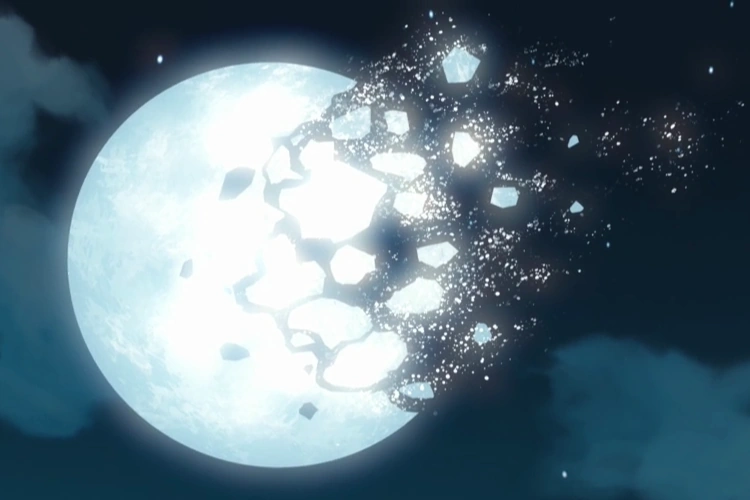
- Shattermoon Eve (Midspring 1st) - This event is more popular in small towns than it is in the cities, where contests are held to see who can tell the best tale about how the moon wound up broken. In more recent years, the event is simply a storytelling gathering, and people recite poetry or stories that may not have anything to do with the moon. In Mistral, children are given three large moon dumplings made of sticky rice on a skewer, and race about trying to take bites out of other kids' moon dumplings before the timer runs out. Prizes are awarded to those who take the most bites and those who have the fewest bites on their own skewer. Several parents find this tradition to be too dangerous and refuse to let their kids indulge, but it keeps happening anyway.
- Day of Remembrance (Springend 24th) - A day to commemorate and remember the dead. Because grief is often so deadly and attracts the attention of the Grimm, people use this holiday to bring up happy memories of the people they loved, and talk about them in a positive light. Some may even go so far as to throw colorful parties with copious amounts of food and booze to keep spirits lively.
- Founder's Day (Midsummer 8th) - This holiday is primarily celebrated in Menagerie, though festival-starved kingdoms are slowly incorporating the holiday into their calendars as well -- both as a nod to their Faunus neighbors, and as an excuse to light off a bright showcase of colorful fireworks. It's a holiday of historical importance to the Faunus to celebrate their first Matriarch and Patriarch hundreds of years ago who helped to establish the settlement of Kuo Kuana, which has grown into the thriving Faunus paradise it is today. In Menagerie there's a lot of feasting and dancing, and at the end of the night the current Matriarch and Patriarch both give a speed and blessing over the Faunus people.
- Harvest Day (Midautumn 13th) - Previously this holiday took place on the last day of harvest for farmers, but because the differing climates resulted in varying dates, it was eventually settled on for official celebration on Midautumn 13th. Everyone works together to harvest and preserve as much food as possible for the coming winter months, and complete the celebration with a huge feast. Baked apples, roasted pumpkin, and mutton stew are the most common foods enjoyed on this day, though there may be regional differences (fish in Menagerie, rice in Mistral, etc.). It's traditional to give thanks to farmers either through word, letters, gifts, or money.
- Peace Day (Firstwinter 25th) - This holiday originated in Vale to celebrate King Chesnial's birthday, and his efforts to establish peace. As such, other nations often choose to celebrate this holiday as well. It's as close to a religious holiday as one gets, as committing crimes or fighting battles on this day is considered near-blasphemous. Friends and family exchange gifts, enjoy good food, and make an effort to forgive others for past slights. Those seeking forgiveness often offer gifts or acts of service to those they wronged.
Education
The years of formal, public education usually goes to children starting at the age of five and lasting until the age of seventeen. Typical courses include mathematics, history, chemistry, art, physical education, Dustology, and so on. Everyone receives a somewhat rudimentary understanding of Auras and Semblances, Grimm, Dust, and world history, though the specifics may vary depending on which kingdom offers these courses. Upon reaching the age of 18, a student from any nation may then enroll at Beacon Academy in order to become fully trained as a Hunter. In the past special circumstances allowed younger prodigies to enroll before the age of 18, but the headmaster who allowed such admissions was placed under heavy condemnation, and has since resigned. Students who hail from hunter families may have received combat training prior to their official enrollment, and often stand out during their first year as a result. Education at Beacon typically lasts four years, with each year designated by chess pieces: first years are Rooks, second years are Bishops, third years are Knights, and fourth years are Kings/Queens.
The first month of enrollment at Beacon is considered a month of orientation. All students live in one large common area which allows for absolutely zero privacy, and are expected to mingle with one another as they learn the basics of the school and decide which path of education they want to take. Many choose their specialties early on, while others prefer to generalize and sample different courses until they've made up their minds. In the second month, new students undergo a special training mission to recover a hidden object. At this time, teams are formed, consisting of four individuals who managed to find the same object. The rest of the year is dedicated toward activities and courses to encourage team bonding.
In the second year, more emphasis is placed on combat training, and teams are pitted against one another in order to learn and hone fighting styles. Students must be at least Bishops in order to enter the annual Vytal festival where four-student teams from around the world compete against one another in a bracket style tournament to determine the best fighters (who often receive sponsorships, scholarship funding, and deals with advertisement companies).
Students in their third and fourth years are allowed to go on supervised missions to test their skills against Grimm. These missions are often dangerous, and in some sad cases, a student or even an entire supervised team may be killed. Even so, the danger of these missions is understood and taken seriously, with efforts being made not to send a team anywhere they might be ill-equipped to survive against a threat, with retreat fully encouraged if a student loses his or her nerve. Upon graduation, a Hunter receives a license that grants them the necessary endorsement to protect villagers, merchants, and others from Grimm.
Similar schools are being established in other kingdoms in order to mirror Beacon's success, with Atlas being the most different in that it often encourages students to enlist with the Atlesian military rather than operate independently.
Hunters
Hunters, often called huntsmen and huntresses depending on one's gender, is a term used to describe anyone who undertakes a profession of destroying the Grimm. Though they're more commonly accepted in Vale, Vacuo, and Mistral, Hunters can be found almost anywhere. They are often hired in an official capacity by villagers, travelers, and merchants to safeguard people or cargo from Grimm attacks. Hunters often set their own fees, with some exacting large amounts of Dust, supplies, or cash in exchange for their services, while others ask only for room and board. The more famous or renowned a Hunter is, the better they're paid, and they're more likely to be sought specifically for missions. Hunters can operate either independently or in teams. Some may form guilds for easy recruitment, while others simply go wherever the wind carries them. Hunters are generally regarded favorably by the public, and the profession is highly respected. Occasionally, however, there are some hunters who are considered little better than thugs or mercenaries if they choose to exploit poor villagers in exchange for their protection.
Religion
Worship of the brother gods is practically unheard of, and one would be hard-pressed to find any church that caters to such worshippers. It is believed that the gods do not look kindly upon those who beg for gifts and blessings, and what they give often comes with undesirable strings attached. The most commonly held belief is that there is no heaven or hell, and that when a person dies, their soul ceases to exist. Death is taken very seriously as a result, and people are unlikely to say 'Bob is in a better place now.' Even so, popular old literature did make reference to a heaven and hell, so terms such as 'heavenly' and 'Go to hell!' still have a place in this world. Frequently used curse words refer to the brothers, such as 'Oh gods!' and 'Brothers be damned.' Non-religious curses are similar to what people commonly use on Earth.
IC Community:
![[community profile]](https://www.dreamwidth.org/img/silk/identity/community.png) shattermoon | OOC Community: shatterooc
shattermoon | OOC Community: shatteroocMod Contact:
mistralmods